Hyperbaric Oxygen Therapy in Cambridge
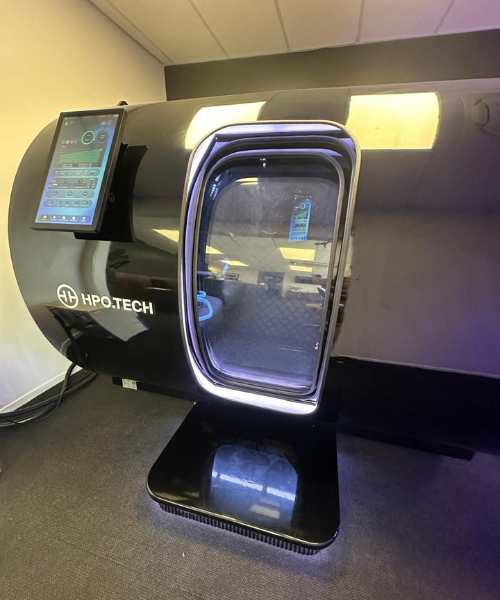
You sit in a pressurised chamber and breathe high-concentration oxygen from a medical-grade concentrator for 1 hour 40 minutes. The pressure dissolves oxygen into your blood plasma so it reaches tissue that normal breathing leaves short.
The Benefits
Raises dissolved oxygen
Under pressure, far more oxygen dissolves into your blood plasma than at sea level.
Reaches poorly supplied tissue
Plasma carries oxygen into areas that red blood cells struggle to service.
Angiogenesis
New blood vessel formation is one of the processes studied in hyperbaric medicine.
Run as a course
Sessions are run as a block of 20 to 40 rather than as one-offs.
It’s not magic. It’s concentrated oxygen under pressure.
Hyperbaric oxygen therapy (HBOT) is simple in principle. You sit inside a sealed chamber, the pressure is gently raised, and you breathe high-concentration oxygen from a medical-grade concentrator. At that pressure your body absorbs far more oxygen than it could at sea level.
How it works
Normally your oxygen rides on red blood cells. Under pressure, oxygen dissolves straight into your blood plasma, so it can reach tissue that would otherwise stay starved of it. That change in oxygen delivery is the mechanism the therapy is built around.
Sessions run for 1 hour 40 minutes. We build a plan around your situation, typically a course of 20 to 40 sessions. We won’t predict what you’ll notice or when, because that varies from person to person.
What a session is like
You settle into a certified four-person chamber with movie-theatre-style seating. As the pressure rises you’ll feel mild ear pressure, much like an aeroplane taking off, it settles quickly. From there, most people read, watch a movie or simply sleep. There are no injections and no recovery time afterwards.
Is it right for you?
HBOT involves no injections, needles or sedation, but it isn’t for everyone. It’s not suitable if you have certain lung conditions, a history of collapsed lung, recent ear surgery, an active fever or severe claustrophobia. We screen for all of this before your first session, and we’ll give you an honest view on whether it’s likely to help.
Why Choose Waikato Hyperbarics For This
Backed by Auckland Hyperbarics
Run in partnership with the team behind Auckland Hyperbarics, home to the largest hyperbaric chamber in New Zealand.
A certified 4-person chamber
Operating at 2.0–2.4 ATA with comfortable, movie-theatre-style seating.
An honest treatment plan
We'll tell you what's realistic for your situation before you commit to a course.
Booked in within 1–2 weeks
No GP referral required and no long waitlist to get started.
What HBOT Can Help With
Long Covid
Hyperbaric oxygen therapy for Long Covid targets the inflammation and cellular damage behind brain fog, fatigue, and breathlessness, not just the symptoms on the surface.
Read MoreConcussion
Hyperbaric oxygen therapy delivers oxygen through your blood plasma to brain tissue that poor circulation leaves short. A mechanism, run as a course of sessions.
Read MoreSports Injury
Hyperbaric oxygen therapy delivers oxygen through your blood plasma to inflamed, poorly circulated tissue that manual therapy and exercise alone can't resupply.
Read MoreCognitive Function
Hyperbaric oxygen therapy dissolves oxygen into your plasma under pressure so it reaches brain tissue that ordinary circulation leaves short. A mechanism, run as a course.
Read MoreEczema
Hyperbaric oxygen therapy targets the systemic inflammation behind chronic eczema, reaching inflamed tissue throughout the body that creams and antihistamines can't.
Read MoreSkin Tear
Hyperbaric oxygen therapy helps stalled skin tears in older adults heal by dissolving oxygen into blood plasma and delivering it to poorly vascularised tissue.
Read MoreQuestions, Answered
How does the oxygen reach my tissue?
Under pressure, oxygen dissolves directly into your blood plasma rather than relying only on red blood cells. That lets it reach areas normal breathing struggles to supply.
How long is a session and how many will I need?
Each session runs around 100 minutes. A typical course is 20 to 40 sessions. We won't tell you when or whether you'll notice a change, because that varies between people. We tailor the plan to your situation.
What does it feel like inside the chamber?
You sit comfortably in a four-person chamber with theatre-style seating. During compression you feel mild ear pressure, like an aeroplane taking off. Most people read, watch a movie or sleep.
Is it safe? Who isn't it suitable for?
There are no injections, needles or sedation, and no recovery time. It isn't suitable for everyone, for example people with certain lung conditions, a history of collapsed lung, recent ear surgery, an active fever or severe claustrophobia. We screen for this first.
Book A Session At Our Cambridge Clinic
Book your session at our Cambridge clinic, or get in touch with any questions. We’ll give you a straight answer and help you figure out if this is right for you.